sábado 16 de mayo de 2009

Avant Garde Parking


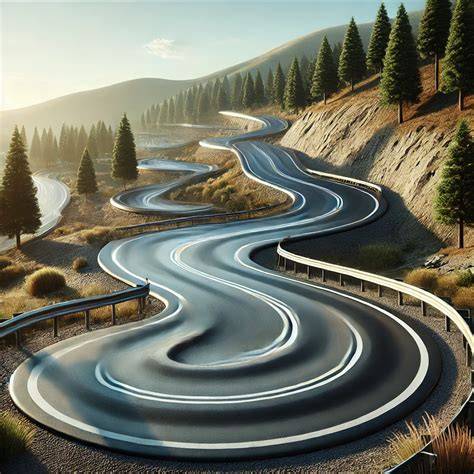
Axel Peemoller diseñó una serie de señalización para un garage de parqueos; una señalización práctica, limpia, clara y vanguardista que se puede leer perfectamente parandose frente al ángulo correcto. Quien dijo que los garages de parqueos son aburridos?

.......................................................................

Axel Peemoller designed a series of practical, sleek and avant garde garage parking signs that can be read clearly when standing in the right position. Who said parking garages should be boring?

jueves 7 de mayo de 2009

Creative Illness


Leí este interesante artículo en el Independent acerca de la linea entre la creatividad y la enfermedad, que piensan ustedes?
....................................................................

Read an article in The Independent about the links between mental illness and creativity. What do you think?

Creative minds: the links between mental illness and creativity

All too often, creativity goes hand in hand with mental illness. Now we're starting to understand why. Roger Dobson reports

Tuesday, 5 May 2009

At first glance, Einstein, Salvador Dali, Tony Hancock, and Beach Boy Brian Wilson would seem to have little in common. Their areas of physics, modern art, comedy, and rock music, are light years apart. So what, if anything, could possibly link minds that gave the world the theory of relativity, great surreal art, iconic comedy, and songs about surfing?

According to new research, psychosis could be the answer. Creative minds in all kinds of areas, from science to poetry, and mathematics to humour, may have traits associated with psychosis. Such traits may allow the unusual and sometimes bizarre thought processes associated with mental illness to fuel creativity. The theory is based on the idea that there is no clear dividing line between the healthy and the mentally ill. Rather, there is a continuum, with some people having psychotic traits without having the debilitating symptoms.

Mental illnesses have been around for thousands of years. Evolutionary theory suggests that in order for them to be still here, there must be some kind of survival advantage to them. If they were wholly bad, it's argued, natural selection would have seen them off long ago. In some cases the advantage is clear. Anxiety, for example, can be a mental illness with severe symptoms and consequences, but it is also a trait that at a non-clinical level has survival advantages. In healthy proportions, it keeps us alert and on our toes when threats are sensed.

It's now increasingly being argued that there are survival advantages to others forms of illness, too, because of the links between the traits associated with them and creativity. "It can be difficult for people to reconcile mental illness with the idea that traits may not be disabling. While people accept that there are health benefits to anxiety, they are more wary of schizophrenia and manic depression," says Professor Gordon Claridge, emeritus professor of abnormal psychology at Oxford University, who has edited a special edition of the journal Personality and Individual Differences, looking at the links between mental illness and creativity. "There is now a feeling that these traits have survived because they have some adaptive value. To be mildly manic depressive or mildly schizophrenic brings a flexibility of thought, an openness, and risk-taking behaviour, which does have some adaptive value in creativity. The price paid for having those traits is that some will have mental illness."

Research is providing support for the idea that creative people are more likely to have traits associated with mental illness. One study found that the incidence of mood disorders, suicide and institutionalisation to be 20 times higher among major British and Irish poets in the 200 years up to 1800. Other studies have shown that psychiatric patients perform better in tests of abstract thinking. Another study, based on 291 eminent and creative men in different fields, found that 69 per cent had a mental disorder of some kind. Scientists were the least affected, while artists and writers had increased diagnoses of psychosis.

"Most theorists agree that it is not the full-blown illness itself, but the milder forms of psychosis that are at the root of the association between creativity and madness," says Emilie Glazer, experimental psychologist and author of one of the Oxford journal papers. "The underlying traits linked with mild psychopathology enhance creative ability. In severe form, they are debilitating."

Research is also showing that traits associated with different mental illnesses have different effects on creativity. The creativity needed to develop the theory of relativity, is, for example, very different from that required for producing surreal paintings, or poetry.

Research is now homing in on whether the psychosis that is linked to different types of creativity comes through schizophrenia and schizotypy traits, through manic-depressive or cyclothymic traits, or traits associated with the autism and Asperger's disorders. A study at the University of Newcastle found significant differences between artistically creative people and mathematicians. While the artists showed schizotypy traits, mathematicians did not, and that fits in with the idea that mathematics and engineering, which require attention to detail, are closer to the autistic traits than to psychosis.

"Affective disorder perpetuates creativity limited to the normal," says Glazer, "while the schizoid person is predisposed to a sense of detachment from the world, free from social boundaries and able to consider alternative frameworks, producing creativity within the revolutionary sphere. Newton and Einstein's schizotypal orientation, for instance, enabled their revolutionary stamp in the sciences."

The stereotypical images of mad scientists working alone and preferring foaming beakers to friends, abound in literature, and reflect a popular perception of the aloof, detached and obsessive genius. But the idea goes back even further. 2000 years ago in Rome, the philosopher Seneca was obviously already on the case when he wrote: "There is no great genius without a tincture of madness."

It's no joke: Comedians and depression

Heard the one about the man who went to the doctor to get help for his depression? He's told to go and see a show with a well known comedian who would make him laugh and lift his spirits. "But that's me," says the patient. "I'm the comedian."

The joke, related by Rod Martin, author of 'The Psychology of Humor – An Integrative Approach', is apparently something of a favourite among comedians, who are known to be prone to depression, from the late Tony Hancock and Spike Milligan, to Stephen Fry and Paul Merton.

One theory is that humour is developed in response to depression, and that it works as a coping mechanism. One study, reported by Martin, looked at 55 male and 14 female comedians, all famous and successful. It found that comedians tended to be superior in intelligence, angry, suspicious, and depressed.

In addition, their early lives were characterised by suffering, isolation, and feelings of deprivation, and, he says, they used humour as a defence against anxiety, converting their feel ings of suppressed rage from physical to verbal aggression. "The comedic skills required for a successful career may well be developed as a means of compensating for earlier psychological losses and difficulties," says Martin. A second study did not find higher levels, although comedians had significantly greater preoccupation with themes of good and evil, unworthiness, self-deprecation, and duty and responsibility.

"A significant proportion of comedians do seem to suffer more with depression," says Professor Gordon Claridge, emeritus professor of abnormal psychology at Oxford University. "Comedy seems to act as a way of dealing with depression. I think there is an emotionality and cognitive style that goes along with these depressive disorders which seems to feed creativity."

Salvador Dali was not just a great artist. He also met the criteria for several psychosis diagnoses, a mixture of schizophrenic and depressive. He may also have been paranoid, as well having antisocial, histrionic, and narcissistic disorders. "Dalí and his contribution to the history of art highlights that abnormality is not necessarily disagreeable – or to be so readily dismissed as a sign of neurological disease. For without his instability, Dalí may not have created the great art that he did," says Caroline Murphy of Oxford.

miércoles 6 de mayo de 2009

Sixties Design


Sixties Design es una publicación de Taschen, compilada por Phillippe Garner, una retrospectiva del diseño de la época y la estética sesentera que va desde el Modernismo Internacional hasta el Space Age, una época postguerra de prosperidad para nuevos espacios urbanos imponiendo una tendencia llena de estilo geométrico como un nuevo patrón de vida para proyectos habitacionales, edificios corporativos y parques. Exponentes como Lucia Costa y Oscar Niemeyer; Kisho Kurokawa y Moshe Safdie entre otros hacen de estos proyectos nuevas realidades. Les mostramos un poco de interiores para oficinas, livings y lounges.

........................................................................

Sixties Design is a publication by Taschen, edited by Phillippe Garner, a retrospective of the era of sixties aesthetic. A review that goes from the International Modernism to the Space Age, a post-war era full of prosperity to propose a trend of a geometric pattern of living for residences, corporative buildings and parklands intersected by motor transited corridors. Designers such as Lucia Costa and Oscar Niemeyer, Kisho Kurokawa y Moshe Safdie among others were visionaries and the creators of a new reality at the beginning of the decade. Meanwhile, enjoy a bit of interior design for working, livings and lounges.

martes 28 de abril de 2009

Esperanza para todos


Una muestra de uno de nuestros más queridos clientes, Esperanza. La creadora de estos accesorios es la diseñadora guatemalteca indie, Ana Karen Bathen. Por el momento les mostramos un poco del photoshoot de Renato Osoy y del backstage

....................................................................................

A sample of our most beloved clients, Esperanza. Ana Karen Bathen is a guatemalan indie designer, the creator of this accesories. Meanwhile we show you a sneak peek of the backstage and the photoshoot by Renato Osoy

lunes 20 de abril de 2009

Homage


Un pequeño homenaje a la estética de una época que nos inspira día tras día. Bellas imágenes por chizno 01 y titopadilla via flickr. 

...............................................................................

A little homage to a decade of aesthetic that inspire our work day after day. Beautiful images by chizno 01 and titopadilla via flickr.

viernes 17 de abril de 2009

Readymech Toys


Y para quitarse el estrés de la compu, Readymech diseñó una serie de juguetes y pinhole cameras hechas de papel, completamente imprimibles practicamente en cualquier printer. Los archivos se pueden bajar en pdf directamente desde aquí.

.........................................................................................

Take a breath from the computer! Readymech designed a series of toys and pinhole cameras made from paper, fully printable on practically any printer. You can download this toys in pdf files here. Enjoy!


jueves 16 de abril de 2009

Mi primer diseño


Muestras de posters de nuestros alumnos de la Escuela de Diseño y Arte Toscana. El reto era crear un diseño inspirado en moda, diseño de interiores y cultura popular a partir de una estructura en repetición, utilizando grafismos e iconografías populares como La Chilindrina, Don Ramón y Kiko recortados de revistas o libros, incluso dibujos creados por ellos mismos. El resultado fue transferido utilizando thinner y fotocopias sobre cartulina, la misma técnica que algún dia utilizaron los hippies para hacer sus carteles de protesta. Un diseño 100% ingenuo y fresco, sin colorantes digitales ni artificiales.

................................................................................

Samples of posters from our design students @ Toscana Art & Design School. The challenge was to create a fashion inspired, interior wallpaper and pop culture composition based on a repetitive structure, using graphic elements and popular graphics such as La Chilindrina, don Ramón y Kiko from books and magazines, even drawings created by themselves. The result was transfered using thinner and fotocopies over white paper using the same technique that hippies used to design posters. A 100% fresh, naive design with no digital colors.